
Land Claims of William Weeks
In 1682, Robert Cavalier, Sieur de la Salle, left Montreal to explore the length of the Mississippi River from Canada to the Gulf of Mexico. In that year, La Salle claimed for France all the lands drained by the Mississippi and named this new territory “Louisiana” in honor of Louis XIV.
During the early 1700s, the French tried to establish settlements in this vast new territory. Natchitoches was founded in 1714 and New Orleans four years later in 1718. Louisiana’s unique landscape and climate, so foreign to the French, made it difficult to attract new colonists. There were no easy riches like gold or silver to lure settlers to the vast struggling colony. Support from the French government waned when France went to war with Britain in the 1750s. In the American colonies this conflict became known as the French and Indian War.
In recognition of Spain’s support for the French in the war with Great Britain, France transferred Louisiana to Spain in 1763 by the Treaty of Paris. Spain experienced the same problems as the French in colonizing their new territory. In an effort to increase the population and consequently the productivity and value of the colony, the Spanish governor Miro, who took office in 1785, began to encourage settlement by some of the Anglo-Americans who were eagerly pushing westward away from the older established and more heavily populated English colonies on the Atlantic seaboard.
These eager Anglo-Americans included many families important to the history of the Shadows: William Weeks, Lewis Moore (father of John Moore), Charles M. Thruston (grandfather of Mary Weeks Moore), Frederick Conrad (Mary’s father), and members of the Harding, Palfrey, and Swayze families.
Between 1778 and 1786, William Weeks claimed 10,000 arpents of land from the King of Spain and established a cotton plantation on Bayou Sara near present-day St. Francisville. William and his wife, Rachel Hopkins Swayze, widow of a member of the land-rich Swayze family from Natchez, settled here and raised three children. David Weeks, the youngest of the three, was born in 1786.
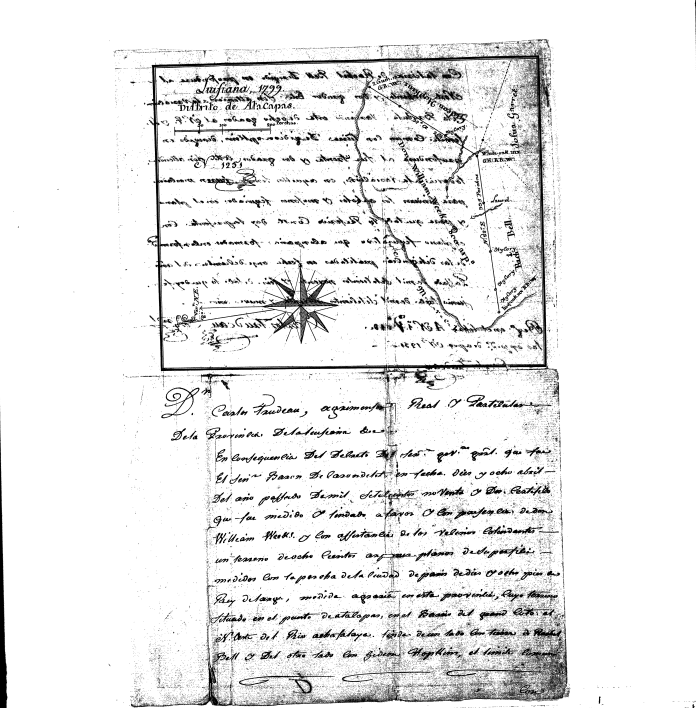
In 1791, Baron de Carondelet became governor of the Spanish-Louisiana Territory, and he continued the earlier policy of settlement, especially in the Attakapas District (present-day parishes of Iberia, St. Martin, St. Mary, Vermilion, and Lafayette). As early as 1792, William Weeks petitioned Carondelet to have a survey made for a land grant on Grand Cote (Weeks Island) in the Attakapas District. The request for the survey was approved and was carried out by William Atchinson in 1796.
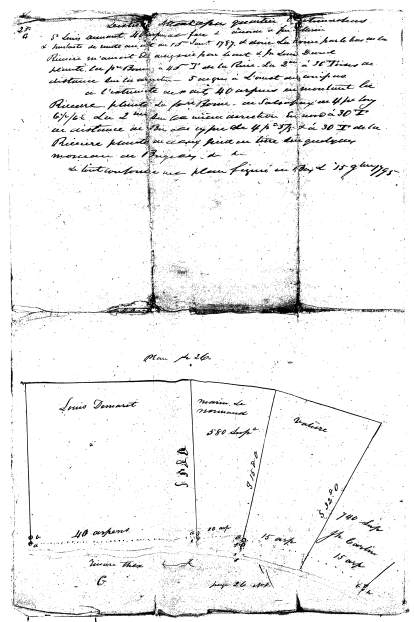
Obtaining legal ownership for such land claims from the Spanish government required a five-step process: 1) choose the land and make an official request to the local Spanish administrator; 2) administrator approves request and sends it to New Orleans; 3) the governor issues an order for survey by the royal surveyor; 4) following the survey, the local Spanish administrator certifies the survey by marking boundaries in the presence of witnesses; and 5) paperwork is sent back to New Orleans to the governor who then issues an official title to the land.
In 1803, when the Louisiana Territory was purchased by the United States for $15 million (less than three cents an acre), earlier settlers such as William Weeks quickly moved to register their land claims to protect them from the numerous fortune hunters attracted to the newly opened territory.
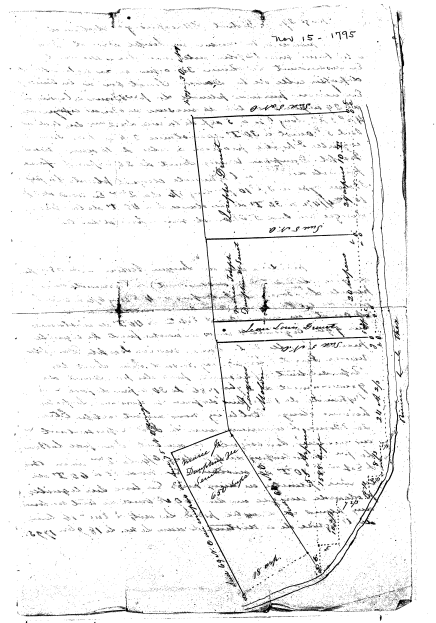
Establishing a claim based on the earlier Spanish land grants was not always simple or even possible. Though William “claimed” 10,000 arpents on Bayou Sara, when he tried to confirm that claim following the 1803 Louisiana Purchase, he was unable to do so. Apparently, he had not completed all five steps, and the new American government would issue only an order of survey for 890 arpents (approximately 754 acres) because William could only prove he had lived on and cultivated 890 of the 10,000 arpents requested.
Regarding the land grant on Grand Cote, William claimed 800 arpents, but he did not follow through with the required act of establishing a plantation within three years of the survey. Thus, Charles DeBlanc was able to successfully claim the land as his property. William later took DeBlanc to court, but he lost the case. In 1814, he purchased the original 800 arpents from DeBlanc and an additional 1,280 arpents for $2,000. A year later he signed all this property over to his 28-year-old son, David Weeks who began work to establish a sugar plantation at Grand Cote.
Originally published in The Shadows Service League Newsletter, January 2003.
Edited by Adam Foreman, EdD, May 2026.
