
“The neighborhood continues very sickly and deaths very common. Our negroes indeed every body continue as sickly as they were in the summer. I gave five or six vomits this morning and other medecine [sic] in proportion so You may guess that I am kept pretty busy. It is difficult to get A physician and all though we employ one by the Year I can seldom get him.” - Mary Conrad Weeks to her brother Alfred Conrad, November 1, 1819
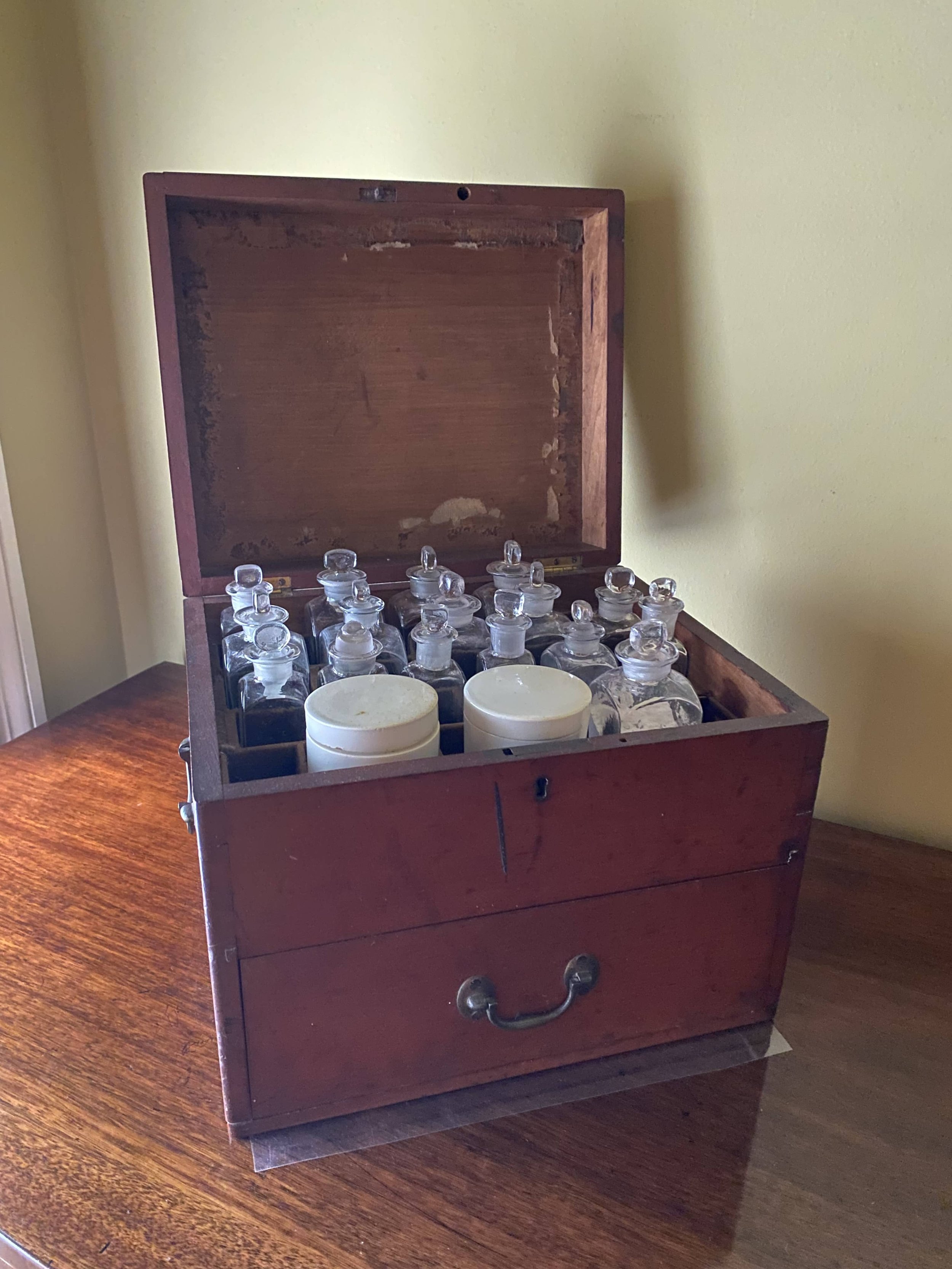
The medicine chest was filled with vials, salves, and tinctures to treat a variety of illness. NT59.67.197 (A-V)
The wife of an enslaver and plantation owner, Mary Conrad Weeks was responsible for the care of over two hundred enslaved people who worked in the sugarcane fields. Like many large plantation owners, David Weeks retained the services of a doctor on an annual basis. But during the sickly season, the demands on the doctor were great, and he was not always available when needed.
The Weeks family and other planters kept medicine chests well-supplied and referred to “common sense” medical books when they needed to treat enslaved individuals for the many illnesses and accidents that occurred on plantations.
The lifestyle of the planter family depended on the labor of those enslaved workers who toiled in the fields. The labor of the enslaved men, women, and children who lived and worked on the plantation was at least in some ways determined by the state of their health.
Mary believed in preventive measures to keep enslaved people as healthy as possible, thereby insuring her investment. She instructed Louisa Bryant, Charlotte, and others to keep their quarters clean. She made sure that all enslaved individuals received a set of clothing for summer and another for winter. Brogans (shoes) were purchased, and though they were uncomfortable, they at least protected those enslaved on the Weeks family plantations from contracting hookworm and wounds that caused tetanus.
Diet is import to good health. In 1843, Mary Weeks Moore wrote instructions for the garden. “Please make Martha sow some more mustard in the Garden for Greens and plant some of those black-eyed Peas... that the Negroes may have something to boil with their Pork as it is very fat.” Enslaved individuals supplemented their provided rations with vegetables or chickens from their own yard, or by fishing or hunting when they had a chance to do so.
The Weeks family built additional cabins when they felt the present ones were “too crowded.” Problems with poor sanitation and contaminated water caused sickness in the quarters, and contagious diseases spread through the entire enslaved community. Mosquitoes and flies carried disease, and food poisoning and dysentery were frequent health problems for those enslaved.
Originally published in The Sickly Season Sentinel, a pamphlet published in August 1993 to complement the Fear of the Sickly Season tour and the Friends of the Shadows Newsletter (Vol. 12), Summer/Fall edition 1993.
Edited by Adam Foreman, EdD, December 2025.
