
January Jobs: “Winding Up” Sugarmaking and Killing the Hog
In the mid-19th century, after the Christmas holidays, parties, family get-togethers, food, and celebrations, it was back to work in January. Those who had traveled to visit other family members made their way home in carriages, buggies, wagons, or on horseback if the roads were not too muddy, or by steamboat on the bayou for a more comfortable trip.
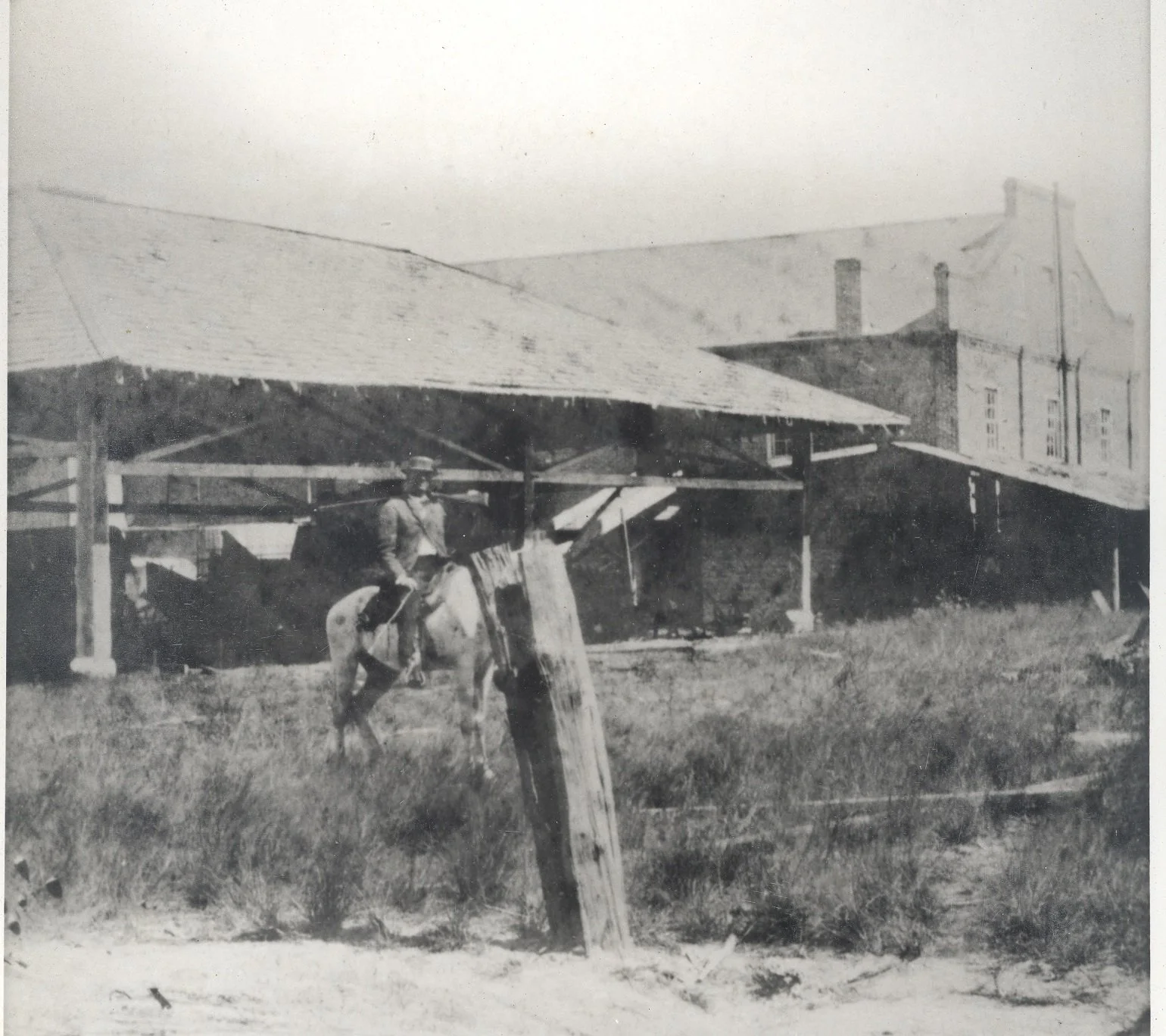
William Frederick Weeks on a horse in front of the sugar mill on the Grand Cote plantation (Weeks Island). From the collection of the Shadows-on-the-Teche.
In the antebellum period, planters frequently had not completed sugarmaking before Christmas and had to work into January. William Frederick Weeks wrote John Moore in January 1854 that he was “winding up my sugar making” on Grand Cote where they had “575 [hogsheads] made” and estimated they would finish the following week with a few hogsheads over 600.
Planters tried to get the next year’s crop planted as soon as possible after grinding was completed, but often bad weather delayed them. Too much rain made the roads and fields too muddy to plow or plant cane. On January 25, 1854, William wrote his mother, Mary Weeks Moore, that he had a “good deal of land ploughed” but “had not been able to plant cane yet…in consequence of the bad weather.” Just a week later, his sister Allie Weeks Meade, on her plantation near Centreville, reported to her mother that they were “getting on pretty well with planting” and had “22 or 24 acres planted.”
If having extra guests for special holiday meals had depleted provisions in the pantry, and winter gardens weren’t producing yet, there were flatboats that plied the bayou “every winter” between Franklin and New Iberia selling barrels of potatoes or apples and many other grocery items. In January 1852, Allie wrote telling her mother that three such flat boats were headed her way with things such as “excellent butter,” “good Irish potatoes,” “very nice small cheeses, corned beef, crackers, flour etc. Their things I think reasonable. I suppose they will sell a little higher price so much farther up at New Town [New Iberia]. We paid for potatoes two dollars & twenty five cts. per barrel. They will ask up there about two & a half.”
If the plantation’s meat supply was getting low, and the planter did not intend to order provisions until some of the recently made sugar was sold, they butchered some of their livestock to tide them over until new supplies were received. January often brought cooler weather and with sugarmaking completed some planters such as Allie, might take time for butchering. “I think I shall take advantage of this cold spell to kill my large hog. I will have him killed this evening… I wish you would ask Louisa how she makes her blood puddings and let me know when you write again… if she boils them and hangs them up or boils them as she is going to use them.” [Allie to her mother Mary, Jan. 23, 1854]
In her next letter, Allie reported on the butchering. Her large hog “weighed after he was cleaned and the entrails taken out one hundred & twelve pounds. I made from him ten gallons and one quart of lard and nearly a barrel of meat including the jaw, chin and all. I think he was quite a profitable hog. Have any of yours grown up more than that? I made my blood pudding the day I killed the hog from a receipt I found in a book. It was very similar to the one you sent. The meat has kept very well.”
January was also the month gardeners turned their attention from the cane fields to their winter gardens. In mid-January 1853, Mary was busy supervising George, the enslaved gardener, in trimming shrubbery and “cleaning off litter” in preparation of sowing seeds. A week later she wrote her husband, John, in Washington D.C., “You cannot think how Industrious I have got. Every good day I am out all the time. The Gardens are all full of trash and many things to move.”
The tasks of harvesting and grinding of the previous year’s cane crop, plowing the fields for the planting of the new year’s crop, trimming shrubbery and preparing the household gardens to be planted, checking household and plantation provisions, and making lists for orders to be placed or shopping trips to be made later in the spring kept people busy and required them to be “industrious.” With the New Year, the cycle of the plantation year began again.
Originally published in The Shadows Service League Newsletter (Vol. 19, No. 1), January 1997 and the Friends of the Shadows Newsletter (Vol. 16), Winter edition 1997.
Edited by Adam Foreman, EdD, January 2026.
